 WBEFCProtecting East Tennessee WatersHelp protect our lakes
WBEFC · EAST TENNESSEE
Stop the Invasion
Protect East Tennessee’s lakes before silver carp establish a population.
The upper lakes still have time. That window will not stay open forever.
THE THREAT, PLAINLY
A fish that can rewrite an entire lake.
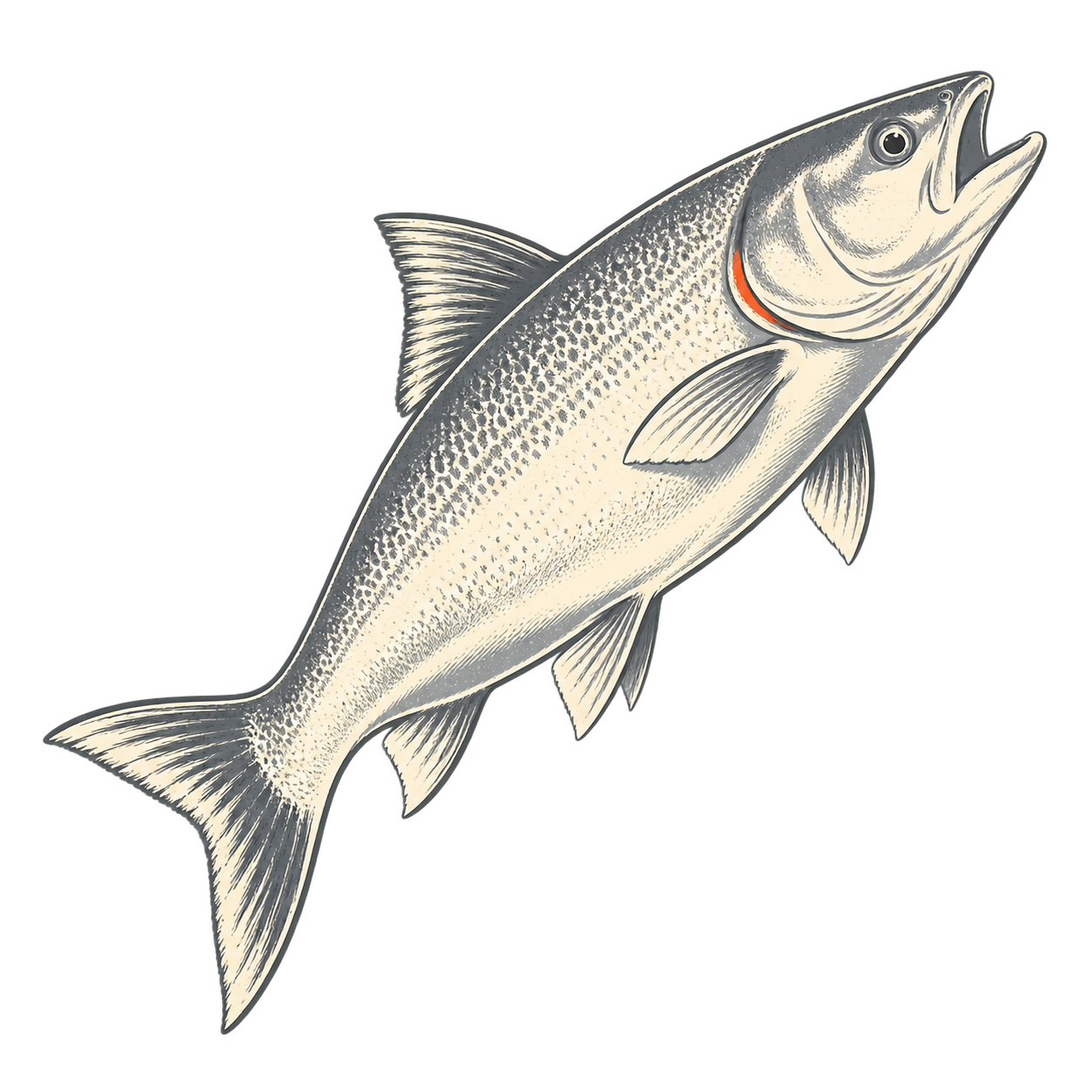
Silver carp are large, invasive filter feeders. They consume algae and zooplankton—the microscopic food that supports native forage fish and the young of bass, crappie, bluegill, paddlefish, and other species.
They spread through connected rivers and navigation locks. Once a reproducing population becomes established across a large reservoir, complete removal is not considered a realistic management option. Control becomes an expensive, continuing effort.
60 lb
Documented potential size cited by TWRA
8 ft
Potential jump height cited by TWRA
42M lb
Invasive carp removed through January 2026
1 chance
To prioritize prevention before establishment
THE INVASION FRONT
The threat is moving upstream.
Silver carp populations are established in the west, fish have been found farther upstream, and the window to protect East Tennessee’s upper lakes is narrowing.
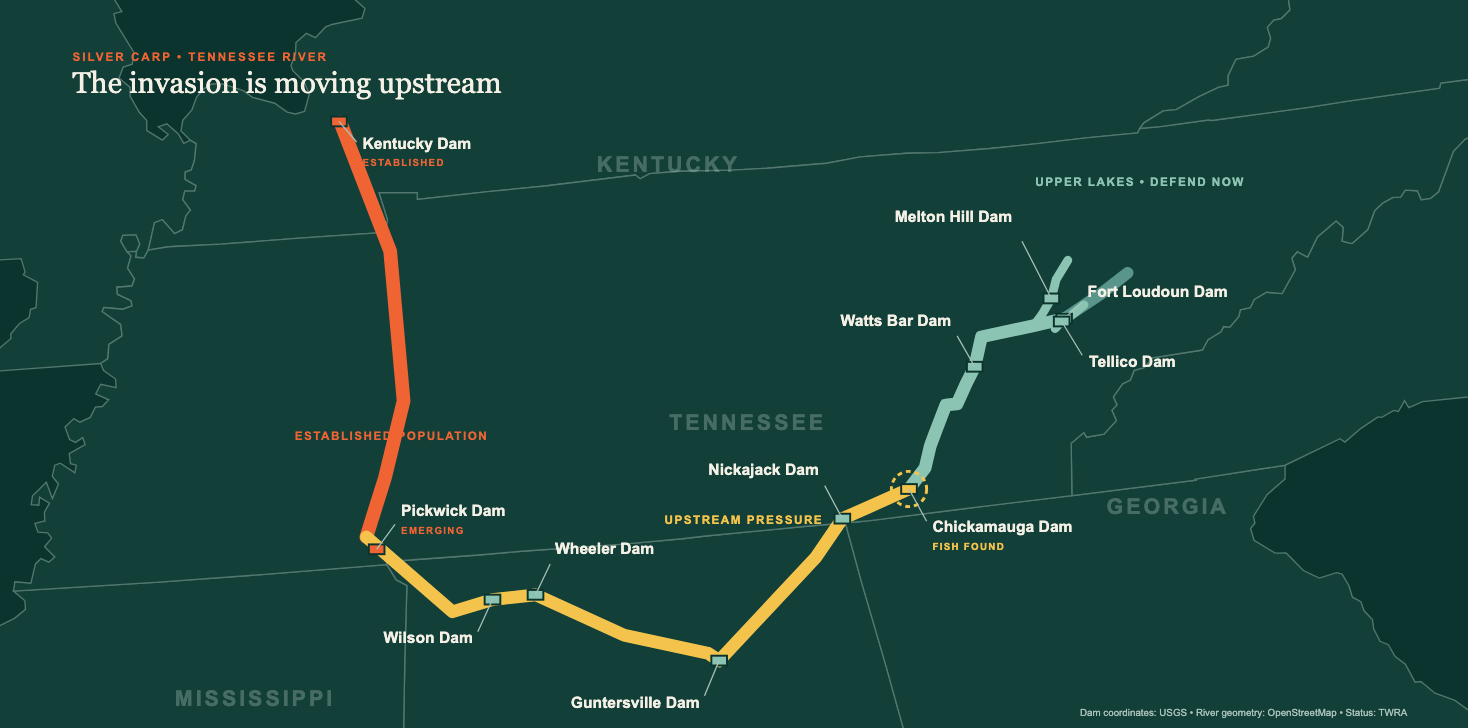
What the evidence says: TWRA identifies Kentucky Reservoir as the Tennessee River’s largest silver carp population and Pickwick as an emerging population. USGS telemetry documented silver carp passing Kentucky and Pickwick dams during its 2016–2019 study, confirming that locks are passage points—not permanent barriers. Silver carp have also been found farther upstream in Chickamauga Reservoir.
IF WE DO NOTHING
The damage would not stop with the fish.
The direction of risk is clear, and invaded river systems show why prevention matters.
01
A stressed food web
Silver carp compete for plankton used by native fish and nearly every sport-fish species during its early life.
02
Danger on the water
Boat motors can trigger silver carp to leap. Fish weighing tens of pounds can strike passengers.
03
A weaker recreation economy
Marinas, guides, tournaments, lodging, restaurants, and lake-dependent businesses face fewer visits and less spending.
04
Permanent management costs
After establishment, agencies and taxpayers inherit years of monitoring, harvest incentives, research, and suppression.
05
Pressure on community life
The appeal of lakefront living depends on healthy water, recreation, and confidence in the future.
06
Fewer options later
Every additional reservoir colonized creates another source population and makes containment harder.
WBEFC’S ORIGINAL FILM
Why stopping the invasion cannot wait.
WBEFC shows how silver carp threaten native fisheries, boating safety, recreation, and the lake economy—and why stopping movement through navigation locks must happen now.
BUILD THE LINE OF DEFENSE
Removal is not prevention.
TWRA’s harvest program is valuable. But suppression after invasion cannot restore the choice East Tennessee still has today: stopping silver carp before they establish in another lake.

01 · PREVENTION FIRST
Stop passage
Install validated deterrent systems at strategic lock-and-dam bottlenecks.

02 · EARLY WARNING
Detect movement
Maintain receivers, field sampling, and rapid public reporting.

03 · REDUCE PRESSURE
Remove at the source
Continue intensive commercial harvest in Kentucky and Pickwick reservoirs.

04 · ACCOUNTABILITY
Fund and deliver
Publish responsibilities, deadlines, funding, and measurable results.
CURRENT PICTURE
What is happening now
RESEARCH
Locks remain critical passage points
USGS and partner agencies continue studying when silver carp pass high-head navigation dams.
REMOVAL
42 million pounds removed
TWRA reports that Tennessee’s incentive program had removed 42 million pounds by January 2026.
DISTRIBUTION
Fish have been found upstream
Silver carp have been found farther upstream in Chickamauga Reservoir.
IF YOU SEE OR CATCH ONE
Photograph it. Keep it. Report it.
- Do not release it alive.
- Take clear photographs.
- Record the exact location and time.
- Contact TWRA: ans.twra@tn.gov or 1-800-831-1174.
THE EVIDENCE BASE
Sources behind this campaign
Every source below opens the supporting agency record.
Invasive Carp in Tennessee ↗
Tennessee Wildlife Resources Agency
Tennessee and Cumberland Rivers Research ↗
U.S. Geological Survey
Tennessee Carp Harvest Incentive Program ↗
Tennessee Wildlife Resources Agency
Deterrent Locations and Sequence ↗
U.S. Geological Survey
YOUR LAKE. YOUR VOICE.
Make prevention impossible to ignore.
Ask local and state leaders for a funded, time-bound plan to protect the upper Tennessee River lakes. Share the map with your marina, fishing club, HOA, county commission, and civic organization.
ABOUT WBEFC
Local stewardship. Regional impact.
The Watts Bar Ecology and Fishery Council is a 501(c)(3) nonprofit founded in 2017 to protect the ecology and economic vitality of the upper Tennessee River system.
WBEFC
335 Goose Point
Spring City, TN 37381